
WhatsApp:
+86 18866361895
WhatsApp:
+86 18866361895
Five-Year Full Life Cycle Cost Analysis of Yuntang Soil Heavy Metal DetectorsProduct Selection Q&A1. Q: Five-year total cost breakdown of low-cost YT-TRB (300 RMB) for store us···
 在线咨询
在线咨询
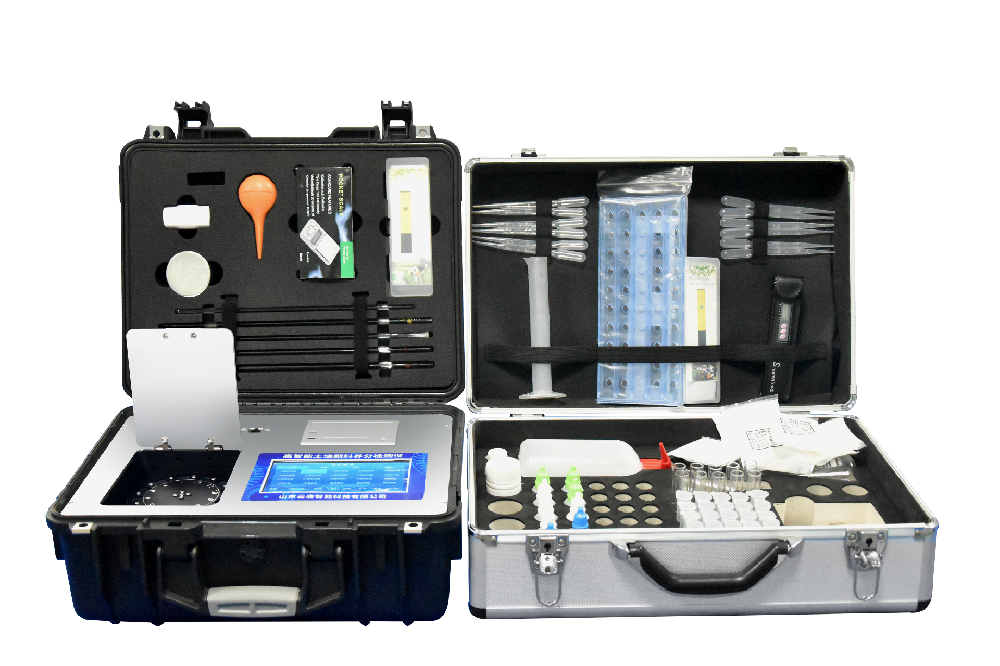
Five-Year Full Life Cycle Cost Analysis of Yuntang Soil Heavy Metal Detectors
1. Q: Five-year total cost breakdown of low-cost YT-TRB (300 RMB) for store use A: The one-time procurement cost of YT-TRB is 300 RMB without any system upgrade or calibration service fees. It does not carry built-in lithium batteries and relies on mains power supply permanently without battery replacement expenditure. Annual consumable cost of simple digestion reagents is low. The machine has no electronic chip or rotary transmission components, with almost no return-to-factory maintenance expenditure within five years. The implicit core cost is manual labor: single-channel single-sample testing requires repeated cyclic operations for large-scale sampling, and all farmer screening records can only be filed on paper manually. It is only suitable for agricultural stores with less than 20 daily samples. For farmland surveys with large sample volumes, the accumulated manual labor cost within five years will far exceed the machine’s purchase price.
2. Q: Five-year comprehensive cost of YT-TR01 (3200 RMB) for individual farmers A: The one-time procurement investment of YT-TR01 is 3200 RMB with free basic system updates for life. It has no built-in lithium batteries and only supports mains power supply. Annual digestion reagent expenditure is consistent with YT-TRB. The optical lens has low failure probability within five years without transmission components. The implicit cost lies in batch testing labor: single-channel operation requires repeated sample preparation for hundreds of soil samples, without GPS and cloud automatic archiving functions, all plot data need to be recorded manually on paper. For scattered single-plot farmers with sporadic sampling demands, the comprehensive cost is controllable, while contiguous farmland surveys will generate huge accumulated manual labor cost within five years.
3. Q: Five-year full life cycle cost of standard general model YT-ZSB (24600 RMB) A: The one-time procurement investment of YT-ZSB is 24600 RMB with free remote system updates for life. The four-wavelength light source has a service life of 100,000 hours without replacement within five years. The built-in lithium battery only needs to be replaced once within 2-3 years at low cost. Annual digestion reagent expenditure is moderate, and the built-in printer only consumes thermal paper. The core advantage is that the 12-channel synchronous testing function greatly reduces manual labor cost for batch sampling. Automatic national standard comparison, GPS coordinate recording and wireless batch upload eliminate manual ledger work. For agricultural stations and planting bases conducting annual farmland surveys, the saved labor cost within five years can offset the machine’s purchase price difference. There are no additional upgrade or calibration service fees.
4. Q: Exclusive incremental cost of law enforcement customized model YT-TR24 (26800 RMB) within five years A: The basic optical and channel hardware of YT-TR24 is consistent with YT-ZSB, with an extra one-time hardware cost of 2200 RMB for dedicated regulatory transmission modules. There are no annual platform access or data storage service fees. The incremental value lies in encrypted locking of test data and directional push to supervision backends, avoiding re-sampling and reagent loss caused by loss of on-site evidence records. For district-level environmental bureaus conducting large-scale on-site law enforcement within five years, the saved re-sampling labor and reagent cost can fully cover the extra procurement difference. For planting bases without law enforcement filing demands, this customized module will be idle all year round, leading to unnecessary cost waste.
5. Q: Five-year procurement value of mine monitoring model YT-TRX07 (36800 RMB) A: The basic detection consumable cost of YT-TRX07 is consistent with YT-ZSB, with an extra one-time investment of 1220 RMB for thickened lithium battery and shockproof box upgrades. There are no annual outdoor system maintenance fees. The exclusive value lies in the 12-hour long battery life and expanded offline storage, avoiding repeated round trips between mountain mining areas and factories for charging and data synchronization, reducing transportation and sampling labor cost. Only mining pollution monitoring institutions carrying out long-term fieldwork can recover the extra investment within five years. Ordinary farmland monitoring scenarios will keep these outdoor upgraded functions idle, leading to higher five-year comprehensive cost.
6. Q: Five-year comprehensive cost of high-end laboratory model YT-TR60 (59800 RMB) A: The one-time procurement cost of YT-TR60 is 59800 RMB, with extra investment in high-precision optical modules and multi-item expansion hardware. All system and testing item updates are free for life without annual calibration fees. Complete digestion consumable kits are delivered together, and the machine supports triple data backup to avoid re-testing caused by data loss. Three-level quality control authority management reduces laboratory sorting labor cost, and external A4 printers only consume printing paper. For third-party testing labs issuing official reports, the revenue generated within five years can cover the high procurement cost. Agricultural and mining enterprises without quantitative reporting qualifications will keep high-precision and multi-expansion functions idle, leading to excessive five-year holding cost.
1. Q: Core implicit long-term labor cost of low-cost single-channel models A: YT-TRB and YT-TR01 only support single-sample testing per round without 12-channel synchronous testing, requiring repeated digestion and operation for hundreds of soil samples. There are no automatic national standard comparison, GPS and cloud archiving functions, and all plot and over-standard data need to be recorded manually on paper. The lack of offline cache functions will lead to complete loss of sampling records when power is cut, requiring re-sampling and re-testing with extra reagent and labor cost. They are only suitable for stores with a small number of daily visiting farmers. For large-scale farmland surveys, the accumulated five-year manual and reagent cost will far exceed the procurement cost of YT-ZSB standard model.
2. Q: Labor-saving value of YT-ZSB’s 12-channel batch function within five years A: The 12-position rotary cell of YT-ZSB can process 12 samples synchronously, cutting the testing time of hundreds of soil samples to one-twelfth of single-channel devices. The system automatically distinguishes qualified and over-standard samples, and GPS and wireless upload eliminate manual ledger recording. Annual farmland surveys save dozens of hours of sorting labor, and the four-wavelength light source does not need replacement within five years without any extra upgrade fees. The saved labor cost within five years can offset the machine’s initial procurement difference, making it the most cost-effective model for general batch monitoring scenarios.
3. Q: Long-term cost advantage of encrypted data module of YT-TR24 without annual fees A: YT-TR24’s built-in encrypted storage module locks all on-site evidence data to avoid artificial deletion, and dedicated GPRS channels push data to supervision backends without annual platform access fees. Offline encrypted cache prevents data loss caused by signal disconnection, eliminating the labor and reagent cost of re-sampling. For environmental bureaus conducting large-scale law enforcement within five years, the saved re-testing expenditure can fully cover the extra 2200 RMB procurement difference. For units without regulatory filing demands, this module generates no practical value and belongs to redundant investment.
4. Q: One-time investment logic of outdoor upgraded hardware of YT-TRX07 for mines A: All outdoor upgrades of YT-TRX07 are one-time hardware investments without annual maintenance fees. The thickened lithium battery and expanded offline storage reduce repeated round trips between mountain mining areas and factories, cutting transportation and sampling labor cost. Thickened shockproof and waterproof boxes reduce the frequency of return-to-factory maintenance caused by gravel collision and rain damage. Only long-term mine pollution tracing institutions can recover the extra investment within five years. General farmland monitoring will keep these outdoor functions idle, leading to unnecessary extra expenditure.
5. Q: Long-term return on investment of high-precision and expandable functions of YT-TR60 for labs A: YT-TR60’s high-precision optical system meets national quantitative standards for official reports, and expansion ports support multiple testing items without purchasing additional separate detectors. Triple data backup avoids re-testing caused by data loss, saving a large amount of experimental reagents and labor cost. Three-level quality control authorities reduce laboratory data sorting labor. For third-party testing labs, the report revenue within five years can cover the high procurement cost. Enterprises without reporting qualifications cannot make use of these high-end functions, leading to excessive five-year holding cost.
6. Q: Unified long-term cost advantage of free system updates for all intelligent models A: YT-ZSB, YT-TR24, YT-TRX07 and YT-TR60 support free remote updates of systems and national standard libraries for life without annual software subscription or calibration fees. Low-cost single-channel models cannot be updated remotely, requiring manual reference to paper standards, leading to frequent misjudgment and extra reagent loss. All intelligent models adopt one-time purchase mode without continuous post-payment expenditure, and the five-year total expenditure is predictable without hidden cost overrun risks.
1. Q: Labor loss calculation of batch sampling with low-cost single-channel models A: It takes 4 to 5 hours to complete one hundred soil samples with YT-TRB/YT-TR01 due to repeated digestion and single-sample operation. YT-ZSB’s 12-channel synchronous testing only needs 40 minutes for the same sample volume, with automatic plot and over-standard data recording without manual paper work. For dozens of annual farmland surveys, the accumulated labor gap within five years is huge. Low-cost machines have low one-time cost, but long-term manual labor expenditure offsets the price advantage for large-scale sampling work.
2. Q: Labor-saving details of batch automatic archiving of YT-ZSB within five years A: GPS automatically records sampling coordinates during farmland surveys, and data can be uploaded to the cloud in batches via WiFi after testing. The built-in printer outputs complete plot monitoring receipts with automatic distinction of qualified and over-standard samples, eliminating manual sorting of paper ledgers. Each annual survey saves 3 to 5 hours of sorting labor, with no continuous software charges. The accumulated saved labor within five years greatly offsets the initial procurement investment of the standard model.
3. Q: Practical value of encrypted evidence to avoid re-sampling cost of YT-TR24 A: Without encrypted cache, data will be completely lost when signals are disconnected during field law enforcement, requiring re-driving to pollution plots for sampling, digestion and testing with half a day’s labor and complete reagent consumption. YT-TR24 stores all evidence records in encrypted form offline and uploads them in batches after networking, eliminating re-sampling expenditure. For five years of large-scale law enforcement work, the saved re-testing cost can cover the extra procurement difference of the customized model.
4. Q: Optimized sampling labor saved by expanded cache of YT-TRX07 for mines A: Low-cost machines have small local storage space and need to return to factories to clear data halfway during mountain sampling without 4G signals. YT-TRX07’s expanded offline storage can hold thousands of pollution point records for all-day mountain sampling without round trips, cutting transportation labor cost. Only long-term mine fieldwork can generate continuous labor savings, while farmland sampling near villages will not make use of this function.
5. Q: Three-fold data backup to avoid re-testing cost of YT-TR60 for labs A: Single storage machines may lose all experimental data due to equipment failure, requiring re-preparation of all digestion samples with large reagent and labor loss. YT-TR60 realizes triple backup of local machine, USB and cloud servers, permanently retaining all test records without re-testing. For five years of laboratory experiments, the saved reagent and sorting labor can cover the high procurement cost of the high-end model.
6. Q: Labor-saving effect of synchronous four-wavelength testing of all intelligent models A: 12-channel intelligent machines complete five heavy metal tests with one set of digestion reagents per batch. Low-cost single-channel devices need five separate digestion operations for the same five indicators, consuming five times more reagents. For large-scale annual surveys, the accumulated reagent expenditure gap within five years is obvious. Intelligent synchronous testing continuously cuts consumable cost for long-term use.
1. Q: Long-term consumable cost of no automatic calibration function on low-cost models A: YT-TRB and YT-TR01 have no built-in automatic light source calibration. Long-term field mud and reagent pollution lead to continuous numerical drift, requiring repeated re-testing and extra reagent consumption. YT-ZSB and other intelligent machines conduct automatic monthly calibration with stable numerical values, cutting annual reagent expenditure to one-third of low-cost models. The five-year accumulated reagent cost gap is prominent.
2. Five-year replacement cost of standardized maintenance of YT-ZSB A: The four-wavelength light source has a service life of 100,000 hours without replacement within five years. The rotary cell is made of wear-resistant solid materials without high-frequency accessory replacement. The lithium battery only needs one replacement within 2-3 years at low cost, and the printer only consumes thermal paper. There are no expensive optical or channel accessories to be replaced within five years, with far lower post-maintenance cost than low-cost machines with scratch-prone optical lenses.
3. Q: No extra maintenance expenditure for encrypted data backup of YT-TR24 A: Backing up evidence records via USB every half month only requires ordinary flash drives without dedicated encrypted storage equipment. The machine’s built-in encrypted program has no annual service fees. The daily maintenance flow is consistent with YT-ZSB with only one extra data backup step, without continuous post-payment maintenance cost for law enforcement work.
4. Q: Maintenance cost reduction brought by thickened shell of YT-TRX07 for mines A: Low-cost thin shells are prone to damage from gravel collision and rain within one year, with single return-to-factory maintenance cost high. YT-TRX07’s thickened shockproof and waterproof box reduces the frequency of return-to-factory overhaul caused by field damage for five years, cutting accumulated maintenance expenditure for mine monitoring work. Farmland sampling without collision risk cannot make use of this advantage.
5. Q: Monthly professional calibration to avoid report rework cost of YT-TR60 A: Without regular high-precision calibration, the test numerical drift of ordinary machines will lead to rejected official reports requiring re-testing, consuming large reagent and labor cost. YT-TR60 conducts two rounds of monthly optical calibration to maintain numerical compliance with national standards, eliminating report rework expenditure within five years, which is a necessary cost control measure for third-party labs.
6. Q: Unified battery maintenance to extend replacement cycle of all intelligent models A: All built-in lithium batteries of intelligent machines are equipped with over-charge and over-discharge protection circuits. Regular full charge-discharge cycles every two years delay capacity attenuation, extending the replacement cycle to 2-3 years. Low-cost machines have no built-in lithium batteries, requiring power adapters to be carried during fieldwork with extra transportation labor cost for long-term mobile sampling.

Scan QR code on WeChat