
WhatsApp:
+86 18866361895
WhatsApp:
+86 18866361895
Precision agriculture and soil‑formulated fertilization require comprehensive understanding of soil fertility status, including macro‑nutrients, medium‑trace elements, organic m···
 在线咨询
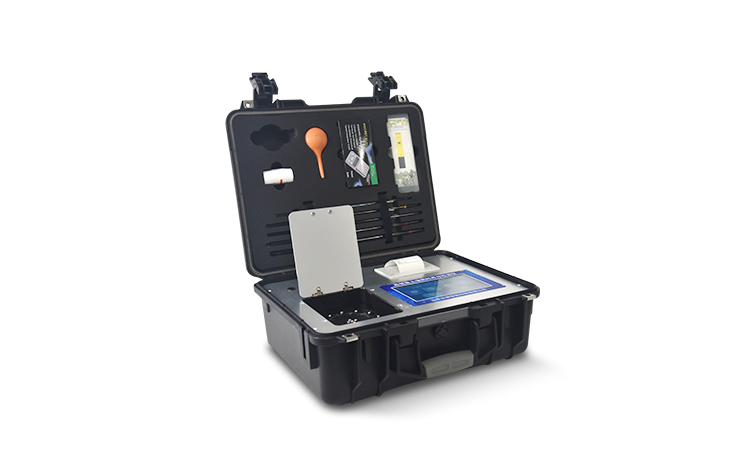
Precision agriculture and soil‑formulated fertilization require comprehensive understanding of soil fertility status, including macro‑nutrients, medium‑trace elements, organic matter, pH value, salt content and heavy‑metal pollution background of farmland soil. Traditional laboratory soil testing process is time‑consuming: soil sample collection, air‑drying, grinding, chemical extraction and instrumental measurement usually take several working days. Field portable soil‑nutrient detecting instruments can complete extraction and measurement on site, providing rapid data support for agricultural technical services, farmland investigation and soil‑pollution screening. YUNTANG YT‑TR03 high‑intelligence soil‑fertilizer nutrient detector belongs to research‑grade portable detecting equipment, widely adopted by universities, scientific‑research institutes and agricultural extension departments.
This instrument is equipped with ARM Cortex‑A7 quad‑core processor and Android intelligent operating system, operated via 7‑inch high‑definition touch screen. It has 12 independent detection channels, supporting simultaneous multi‑sample measurement to improve testing efficiency significantly. Four‑wavelength stable cold‑light sources (red, blue, green, orange) are adopted. Light‑intensity automatic calibration and intelligent constant‑current‑voltage‑stabilizing circuit design eliminate signal drift caused by long‑time working of light‑sources. The color‑cell structure uses standard 1 cm cuvettes without mechanical displacement abrasion. Optical‑path positioning accuracy is high and external‑light interference can be effectively shielded. The instrument obtains calibration certificate from National Institute of Metrology of China. Its stability performance is six times better than the requirement of national standard JJG179‑90, and repeatability reaches the level of grating spectrophotometer.
The detecting scope covers comprehensive items: soil macro‑nutrients including ammonium nitrogen, available phosphorus, available potassium, total nitrogen, total phosphorus, total potassium, organic matter; soil medium‑trace elements calcium, magnesium, sulfur, boron, iron, manganese, zinc; soil heavy‑metal indicators lead, arsenic, cadmium, chromium, mercury, nickel; meanwhile it can test various fertilizers, fresh crop tissues, dry plant samples, tobacco leaf nutrition and partial water‑quality indexes. Built‑in expert fertilization system contains parameter databases for hundreds of crops. After inputting soil‑testing data and target yield, the instrument can automatically calculate recommended fertilizing amount and output complete fertilizing‑scheme report. Plant‑nutrition‑deficiency picture atlas is embedded for visual leaf‑diagnosis reference. Operation‑guidance videos are stored inside for new‑user training.
Built‑in high‑speed thermal printer supports printing reports with test information, two‑dimensional code and fertilization advice. It supports Wi‑Fi and optional 4G module for wireless uploading of detecting data to smart‑agriculture cloud‑platform. Managers can browse historical soil‑testing records and fertility‑changing trend remotely on mobile phones. USB and Ethernet interfaces are reserved for data export. Multi‑account password‑login mechanism realizes user‑authority management. GPS positioning function can record longitude‑latitude information of field sampling points. Built‑in large‑capacity lithium battery supports more than 10 hours of continuous field work. It can also connect vehicle‑mounted power supply. The whole set of instrument, reagents and consumables are integrated inside high‑strength portable suitcase, equivalent to a compact mobile agricultural‑analysis laboratory.
In field verification experiments for cultivated‑land soil, we collected farmland soil samples of different soil types. Rapid field detection was finished with YT‑TR03, and parallel samples were sent to professional agricultural‑testing laboratory as reference. Test results show that soil nitrogen‑phosphorus‑potassium test error ≤1%, organic‑matter error ≤2%, trace‑element relative error ≤5%, heavy‑metal relative error ≤5%, which satisfies the requirement of scientific‑research‑level field soil investigation. Users should strictly follow soil‑sample pre‑processing and reagent‑operation specifications to guarantee field‑testing accuracy. YT‑TR03 is suitable for agricultural‑technology promotion stations, fertilizer enterprises, large‑scale planting cooperatives and university agricultural colleges to carry out farmland fertility investigation, fertilizer‑quality identification and soil heavy‑metal pollution preliminary screening work.

Scan QR code on WeChat