
WhatsApp:
+86 18866361895
WhatsApp:
+86 18866361895
[Product purchase-related questions]Q: How to choose among YT‑NY12P, Blue Rainbow NY‑P12, Zhongyun ZH12, and Yunze NY‑Z12 for procurement in large agricultural and sideline prod···
 在线咨询
在线咨询
[Product purchase-related questions]
Q: How to choose among YT‑NY12P, Blue Rainbow NY‑P12, Zhongyun ZH12, and Yunze NY‑Z12 for procurement in large agricultural and sideline products wholesale markets and comprehensive food testing laboratories?
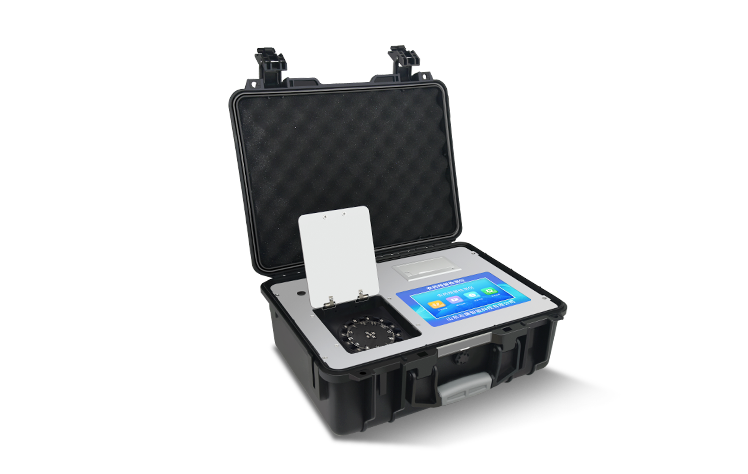
Answer: It is necessary to simultaneously detect common fruits and vegetables, as well as tea leaves, supporting the enzyme inhibition method. It should have a reserved colloidal gold card expansion interface, preferably YT‑NY12P. It features 12 independent optical paths, with built-in correction algorithms for fruit and vegetable matrices and multiple tea types. It boasts a 7-inch Android screen, a large storage capacity of 200,000 entries, and supports WiFi, 4G, USB flash drive, and built-in printing. It can expand the colloidal gold module, accommodating both rapid screening for organophosphorus and carbamate pesticides, and allowing for future upgrades to precise detection of individual pesticides using colloidal gold. The Lanhong NY‑P12 does not have correction for tea leaf matrices; the Zhongyun ZH12 does not support colloidal gold expansion; and the Yunze NY‑Z12 has insufficient storage capacity, making it prone to overwriting a large number of market batch records. The YT‑NY12P covers two major categories of samples: fruits and vegetables, as well as tea leaves, making it suitable for comprehensive markets and laboratories.
Question: What are the differences in purchasing among the four major brands of agricultural product deep processing enterprises?
Answer: The raw materials of the enterprise include various fruits, vegetables, and tea. YT‑NY12P can switch to different matrix algorithms and perform large-scale screening through 12 channels. In the later stage, colloidal gold single item testing is required, which can be directly added to the module without the need to repurchase the entire machine. Lanhong can only perform testing on ordinary fruits, vegetables, and tea samples, which are highly interfered with. Zhongyun lacks expansion interfaces. Yunze data cannot be classified and filtered, making the organization of raw material ledgers troublesome.
Question: What are the priorities for purchasing a comprehensive model with a budget of 3800 yuan?
Lanhong NY‑P12 has no tea leaf correction; Zhongyun ZH12 cannot expand colloidal gold; Yunze NY‑Z12 has limited storage; YT‑NY12P features dual algorithms for fruits and vegetables + tea leaves, 12 channels, expandable colloidal gold, and comes with full transmission and printing as standard. It is equipped with two sets of reagents for fruits and vegetables and tea leaves, eliminating the need for comprehensive laboratories to purchase two separate instruments, resulting in lower long-term comprehensive costs.
Q: Are there any mandatory parameters for purchasing equipment in the comprehensive rapid inspection room for market supervision?
It needs to be compatible with fruits, vegetables, and tea leaves, with the possibility of expanding to colloidal gold in the future. It should have large storage capacity, multiple transmission modes, and traceability QR code reports. YT‑NY12P fully meets these requirements. Other brands lack the ability to correct or expand the tea leaf matrix, and multiple devices are needed for multi-category sampling inspection.
Q: If we only test tea leaves, should we choose the NY12P comprehensive model?
For tea testing only, YT‑CY12, a dedicated tea model, offers better value for money; for samples containing a large amount of fruits, vegetables, and tea, and with plans for future colloidal gold testing, the YT‑NY12P comprehensive model is recommended.
Q: When is it necessary to install the colloidal gold expansion module?
The enzyme inhibition method can only be used for broad screening; if it is necessary to determine the specific content of a single pesticide, a colloidal gold track scanning module needs to be added; if only broad screening is needed on a daily basis, it can be temporarily omitted, with hardware interfaces reserved for future addition at any time without requiring replacement of the main unit.
[Product function-related issues]
Q: What is the value of the YT‑NY12P dual-substrate correction algorithm for fruits, vegetables, and tea?
One set of main unit, by switching modes, can handle both ordinary fruits and vegetables as well as high-pigment tea samples, eliminating the need to separately purchase the BN06 and CY12 instruments, thus saving space on the laboratory bench and reducing procurement budget.
Q: What are the advantages of large-scale screening with 12 independent optical paths?
Twelve samples are loaded onto the machine simultaneously, facilitating the large-scale storage of samples during peak periods in the agricultural and sideline products market, thereby enhancing detection throughput. Each channel undergoes independent zero calibration, and in case of single-channel contamination, only the corresponding sample needs to be retested.
Q: What is the significance of reserving a colloidal gold expansion interface?
The host hardware and software platforms are unified. In the later stage, when adding a single pesticide colloidal gold detection service, the track scanning component can be directly installed, and the existing screen, storage, and data export can all be reused, without the need to repurchase the entire machine.
Q: 200,000 items of large-capacity local storage?
The market records a large number of daily inventory entries, which are categorized and stored based on sample type and sampling time. Key batch records are locked and will not be automatically overwritten, making it suitable for the wholesale market's annual raw material traceability ledger.
Q: Multi-network transmission + QR code traceability report?
WiFi laboratory intranet; 4G mobile sampling in rural areas; U-disk offline backup; print receipts with traceability QR codes, allowing regulatory authorities to scan and verify the original testing records on-site.
Q: Can multiple sets of sample programs be stored?
Fruits and vegetables, green tea, black tea, and oolong tea have separate preservation procedures, and switching samples can be achieved with one click, eliminating the need to repeatedly modify matrix correction coefficients and reaction times.
[Operational issues]
Q: What is the operation process for the mixed sample of fruits, vegetables, and tea from the comprehensive market, YT‑NY12P?
For fruit and vegetable samples, the fruit and vegetable program is used; for tea samples, the tea matrix correction program is switched; corresponding extraction reagents are used for sample pretreatment; samples are poured into cuvettes, and 12 channels can simultaneously load fruit and vegetable or tea samples for mixing and testing; after testing, the respective algorithms are automatically applied to provide a determination; reports are printed in batches, and data is backed up in multiple ways.
Q: How to troubleshoot numerical fluctuations and false positives step by step?
Distinguish the sample type and confirm the activation of corresponding matrix correction; check that the dedicated reagents for the corresponding category are not mixed; wipe the cuvette clean; perform blank calibration; confirm that the reagents are within their expiration dates.
Q: Batch operation for a large number of mixed samples?
Save the detection procedures for various types of samples in advance; a batch of samples can include a mix of fruits, vegetables, and tea leaves; after the detection is completed, filter the sample types and export them in Excel in batches, generating separate ledgers for fruits and vegetables and tea leaves.
Q: How to operate the colloidal gold expansion module after installation?
After installing the track scanning component, switch to the colloidal gold mode, place the test card for automatic scanning and recognition of the CT line, automatically calculate the content of individual pesticides, and archive the report together with the records from the enzyme inhibition method.
Q: What are the operational guidelines for mobile sampling in rural areas?
With the lithium battery fully charged, 4G is enabled for real-time uploading; records are saved locally in the absence of a network; upon returning to the laboratory, all data is exported via a USB flash drive.
Q: How to filter and export historical records?
Data archives can be filtered by sample type and time, and then printed in bulk or exported to Excel for direct use in the raw material inventory ledger of wholesale markets.
[Maintenance and upkeep issues]
Q: What is the cleaning process after daily testing for YT‑NY12P?
Wash and dry all cuvettes; clean the detection chamber of spilled residues from different types of reagents; wipe the touch screen with a dry cloth; remove print paper scraps; store the entire machine in a dust-proof place. The extraction matrices of fruits, vegetables, and tea leaves are different, and residues can interfere with each other. Daily cleaning is necessary to avoid cross-interference.
Question: What are the maintenance and replacement standards for LED light sources, similar to BN06 and CY12.
Q: For the maintenance of lithium batteries during idle storage, the battery capacity should be maintained at 50%, and the battery should be calibrated and recharged every 15 days.
Q: It is strictly prohibited to scratch the transparent surface of the cuvette, and it must be replaced immediately if scratched.
Q: Storage of reagents by category: Fruit and vegetable reagents and tea reagents should be stored separately, with clear labels, and mixing is strictly prohibited.
Q: Quarterly in-depth maintenance for the entire machine: 12-channel multi-standard liquid verification; full-function testing of peripherals; full set of data backup; if the colloidal gold expansion module has been installed, perform simultaneous track lens cleaning and calibration; archive maintenance records.

Scan QR code on WeChat