
WhatsApp:
+86 18866361895
WhatsApp:
+86 18866361895
Product Selection Questions1. Q: How to select models from four major brands for universities, agricultural and forestry research institutes?A: Universities and agricultural & ···
 在线咨询
在线咨询
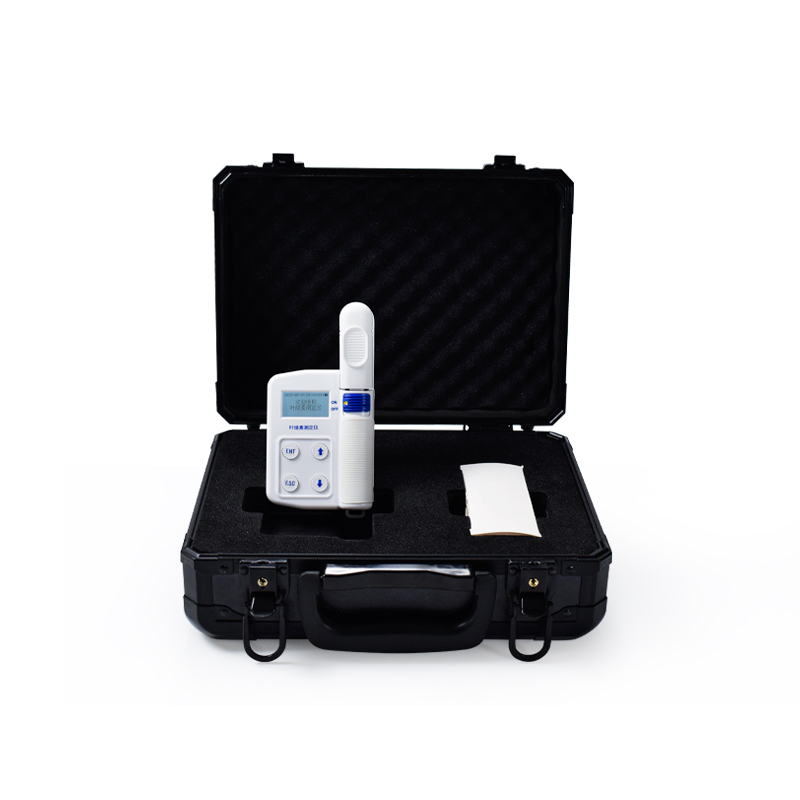
1. Q: How to select models from four major brands for universities, agricultural and forestry research institutes?
A: Universities and agricultural & forestry research institutes mainly conduct plant physiology research and teaching experiments, so priority shall be given to detection accuracy, repeatability, data management and bilingual functions. The Yuntang YT-YC features a chlorophyll accuracy of ±1.0 SPAD and repeatability of ±0.3 SPAD. It can simultaneously measure three indicators including chlorophyll, nitrogen content and leaf temperature. Equipped with 16GB storage and Chinese-English bilingual system, it is fully applicable to scientific research data recording and international academic exchanges, priced at about 1680 RMB. Lanhong Optoelectronics has similar accuracy yet only supports single-parameter detection without nitrogen content measurement, selling at 1750 RMB. Zhongyun Technology has a repeatability of ±0.5 SPAD and 8GB storage, suitable for basic classroom teaching with a price of 1200 RMB. Yunze Technology has basic parameters and no grouped storage, priced at 950 RMB for simple practical training. YT-YC is the top choice for scientific research, Zhongyun for basic teaching and Yunze for low-cost practical training.
2. Q: What key parameters should large planting bases and fruit and vegetable parks focus on when purchasing?
A: Large-scale planting bases require field patrol and nitrogen fertilizer guidance, prioritizing non-destructive testing, portability, battery life and outdoor adaptability. The Yuntang YT-YC adopts non-destructive in-vivo testing without leaf picking. It weighs only 230g and is equipped with a 3000mAh lithium battery. Operating temperature ranges from -10℃ to 50℃, enabling all-weather field operation. It also supports grouped data storage for different plots. Lanhong Optoelectronics also supports non-destructive testing but is heavier and causes fatigue during long-time handheld use. Zhongyun Technology has a shorter battery life and degraded battery performance at low temperatures. Yunze Technology has no grouped storage, making it hard to classify data of different plots. Yuntang YT-YC is preferred for large planting bases, and Zhongyun for medium and small parks.
3. Q: What are the differences in applicable scenarios of four brands for grass-roots agricultural technology stations?
A: Grass-roots agricultural technology stations provide field fertilizer guidance and field surveys, requiring easy operation, convenient data export and strong anti-interference capability. The Yuntang YT-YC is built with an anti-glare system, ensuring accurate measurement under strong sunlight. Its USB port enables data export without dedicated software. Users can view and delete abnormal data on the device, which is ideal for field services. Lanhong Optoelectronics has weak anti-interference, leading to data deviation under strong light. Zhongyun Technology requires supporting software for data export, which is inconvenient for field work. Yunze Technology has primitive data management and cannot eliminate abnormal records. Yuntang YT-YC is the first choice for regular field services, and Zhongyun for simple screening at township stations.
4. Q: How to select instruments from four brands for forestry monitoring stations based on field environments?
A: Forestry monitoring is mostly carried out in mountain forests with large temperature differences and variable light, requiring good temperature & humidity resistance, anti-glare performance and long battery life. The Yuntang YT-YC works under relative humidity up to 85% and maintains stable performance under extreme temperatures and variable forest light. The 3000mAh battery supports all-day field patrol. Lanhong Optoelectronics has a maximum humidity resistance of 75% and is prone to malfunctions in humid forests. Zhongyun Technology suffers from reduced measurement stability at low temperatures. Yunze Technology has poor overall environmental adaptability and is not suitable for forest work. Yuntang YT-YC is prioritized for professional forestry monitoring, and Lanhong for short-distance forest spot checks.
5. Q: How to balance cost and practicality for individual growers and small-scale farmers?
A: Individual growers only use the instrument for nitrogen fertilizer management, so cost-performance and easy operation are the priorities. The Yuntang YT-YC has complete functions, moderate price and low failure rate, suitable for farmers with long-term planting plans. Lanhong Optoelectronics has single functions and high price with poor cost-performance. Zhongyun Technology is affordable with basic complete functions, a good choice for ordinary farmers. Yunze Technology has the lowest price yet average accuracy, only for rough reference. Choose Yuntang for stability with sufficient budget, Zhongyun for limited budget and Yunze for temporary use.
6. Q: How to select products from four brands by different budget ranges?
A: For a budget of 900-1100 RMB, Yunze basic model is recommended for basic chlorophyll detection and temporary use by individual farmers. For 1100-1400 RMB, Zhongyun mainstream model delivers outstanding cost-performance with qualified basic accuracy and portability, ideal for township farmers and small cooperatives. For 1500-1800 RMB, Yuntang YT-YC boasts comprehensive advantages and is the mainstream choice for commercial and scientific research use. For budgets over 1800 RMB, high-end professional models of Lanhong Optoelectronics are available with improved single-item accuracy for high-precision professional experiments. Select models according to budget and scenarios to maximize product value.
1. Q: What are the differences in multi-parameter simultaneous detection among four brands?
A: The Yuntang YT-YC can simultaneously measure chlorophyll, nitrogen content and leaf temperature in one operation. All data are displayed and stored synchronously with a measurement interval less than 0.8 seconds for high efficiency. Lanhong Optoelectronics only detects chlorophyll, while nitrogen content and leaf temperature need separate devices. Zhongyun Technology measures chlorophyll and leaf temperature without nitrogen detection. Yunze Technology only retains the chlorophyll indicator with the most basic functions. Yuntang has prominent advantages for comprehensive judgment of crop nutrition and growth conditions, widely applied in agricultural production and scientific research.
2. Q: What are the differences in performance of non-destructive in-vivo testing among four brands?
A: The Yuntang YT-YC realizes non-destructive in-vivo testing with a measuring area of 2mm*3mm. Users only need to insert leaves without picking, enabling long-term continuous monitoring of the same plant. Lanhong Optoelectronics also supports non-destructive testing but has a larger measuring area, unfriendly to tiny leaves. Zhongyun Technology may cause slight damage to thin leaves and cannot conduct long-term continuous monitoring. Yunze Technology has a simple structure and easily damages tender leaves. Yuntang’s design is more scientific for long-term plant observation.
3. Q: What are the gaps in data storage and grouped management among four brands?
A: The Yuntang YT-YC is equipped with 16GB large storage and supports grouped storage by plots and crop varieties. Users can view and delete abnormal data at any time for convenient classified management. Lanhong Optoelectronics has 10GB storage without grouping function, leading to disordered data. Zhongyun Technology has 8GB storage and can only view records one by one without batch management for abnormal data. Yunze Technology has 4GB small storage and requires frequent deletion of old data when data accumulates. Yuntang’s functions greatly improve data sorting efficiency for multi-plot and multi-crop monitoring.
4. Q: What are the differences in integrated USB ports for transmission and charging among four brands?
A: The Yuntang YT-YC adopts a multi-functional USB port for both data transmission and charging. It can connect to computers without upper computer software, and data can also be exported via memory card flexibly. Lanhong Optoelectronics uses independent ports for data transmission and charging. Zhongyun Technology requires dedicated software for data export with complicated operation. Yunze Technology’s USB port is only for charging and data export relies solely on memory cards. Yuntang offers better user experience for frequent computer connection and data sorting.
5. Q: What are the outdoor performances of anti-glare systems of four brands?
A: The Yuntang YT-YC is built with a professional anti-glare system and high-contrast LCD screen. It maintains stable measurement and clear display under direct sunlight. Lanhong Optoelectronics has no dedicated anti-glare structure, resulting in slight data fluctuation under strong light. Zhongyun Technology has a low-contrast screen which is hard to read in strong light. Yunze Technology lacks both anti-glare function and good display effect. Yuntang is essential for long-term field and forest operation under open air.
6. Q: What is the support situation of Chinese-English bilingual function for four brands?
A: The Yuntang YT-YC supports one-click switching between Chinese and English. All interfaces and data are converted synchronously for international scientific research and agricultural exchanges. Lanhong Optoelectronics only uses Chinese and needs later modification for English display. Zhongyun and Yunze are single-Chinese systems without bilingual function. Yuntang is irreplaceable for scientific research institutions and foreign-related agricultural enterprises with international cooperation demands.
1. Q: What is the complete field operation process for first-time use of YT-YC?
A: Fully charge the device via USB port before first use. Long press the power button to turn on the high-contrast LCD screen and switch language as needed. Select healthy crop leaves and insert them into the 2mm*3mm measuring area without picking. The measurement takes less than 0.8 seconds, and the screen displays SPAD value, nitrogen content and leaf temperature synchronously with automatic data storage. Users can view and delete abnormal data on site. After daily work, export all data via USB or memory card. The whole process is easy for novice operators.
2. Q: How to manage data of different plots with grouped storage function?
A: After power-on, enter the grouping setting interface and create independent files by plots and crop varieties. Select the corresponding group before field testing, and newly measured data will be automatically classified. Switch groups when moving to new plots. Users can filter data by groups during viewing and export. Grouping function clarifies data classification and greatly reduces sorting work for large planting bases and forest monitoring.
3. Q: What are the steps to export data to computer via USB port?
A: Connect one end of a standard USB cable to the device and the other to a computer. The computer recognizes the device automatically without upper computer software. Enter the data browsing interface, select records and click export. Do not unplug the cable during transmission. The 16GB storage allows massive data accumulation, and regular export frees up device space.
4. Q: What operation tips to ensure accurate detection under strong outdoor light?
A: Avoid direct sunlight on the probe during operation. Keep leaves flat and fully attached to the measuring area without wrinkles or holes. Do not block the optical path with hands. Leave a short interval between consecutive measurements for optical path reset. These operations enhance the anti-glare effect and guarantee data accuracy in field work.
5. Q: How to switch between Chinese and English with one click?
A: Tap the language shortcut on the main interface for seamless switching without rebooting. All parameters and prompts are updated synchronously. Use Chinese for domestic field work and teaching, and English for foreign-related exchanges. The operation is simple and adaptable to diverse scenarios.
6. Q: How to view and delete abnormal data on the device?
A: Enter the history data page after power-on. Judge invalid records according to field conditions and delete single or multiple abnormal data in batches. Normal records will not be affected. This function ensures the validity of database and provides reliable basis for data analysis and fertilizer guidance.
1. Q: How to clean and maintain the device after daily field work?
A: Power off the device after daily use. Wipe the body, probe and screen with dry soft cloth to remove leaf debris and dust. Do not rinse the device with water to prevent circuit damage. Focus on cleaning the measuring gap. Place the device in a dry and ventilated area away from direct sunlight and moisture. Daily maintenance protects optical probes and screens to extend service life.
2. Q: How to maintain the 3000mAh lithium battery to extend outdoor battery life?
A: The device has overcharge protection. Disconnect the power once fully charged. Keep the battery fully charged before outdoor work. Maintain 50% power during long-term idle use and recharge every month to prevent battery aging. Do not charge under extreme high temperature. Standard maintenance ensures all-day outdoor operation.
3. Q: How to troubleshoot when data repeatability deteriorates?
A: Poor repeatability is usually caused by dirty probes, irregular leaf placement or optical path deviation. Thoroughly clean the measuring gap and check its flexibility. Test repeatedly with standard leaves. Perform automatic calibration if needed. Conduct self-inspection every month to maintain repeatability within ±0.3 SPAD. Contact the manufacturer if problems persist after troubleshooting.
4. Q: What are the moisture-proof and anti-freezing tips for long-term use in low temperature and high humidity environments?
A: Wipe off water vapor timely after use in high humidity. Do not leave the device in dew or fog for a long time. Preheat the device for 1-2 minutes before operation in cold winter. Store the device at -10℃ ~ 50℃ away from frost. Regular moisture and frost prevention avoid circuit faults and measurement errors.
5. Q: How to protect the device when idle for more than one month?
A: Export all important data via USB or memory card and clean the device thoroughly before long-term storage. Keep the battery at 50% power, power off and put it into a storage bag in a dry and dark place. Power on for several minutes every 30 days to activate circuits and battery. Fully charge the device and conduct blank tests before reuse.
6. Q: How to prevent and troubleshoot poor contact of USB port?
A: Plug and unplug cables gently and avoid pulling violently. Cover the idle port with a dust plug. Clean dust inside the port with dry soft brush if poor contact occurs. Use memory card for data export and contact professional maintenance if the port is damaged.
Scan QR code on WeChat