
WhatsApp:
+86 18866361895
WhatsApp:
+86 18866361895
Product Selection QuestionsHow do grassroots regulatory authorities select high-intelligent food safety detectors?Grassroots market supervision departments and farmers’ markets ar···
 在线咨询
在线咨询
Product Selection Questions
How do grassroots regulatory authorities select high-intelligent food safety detectors?
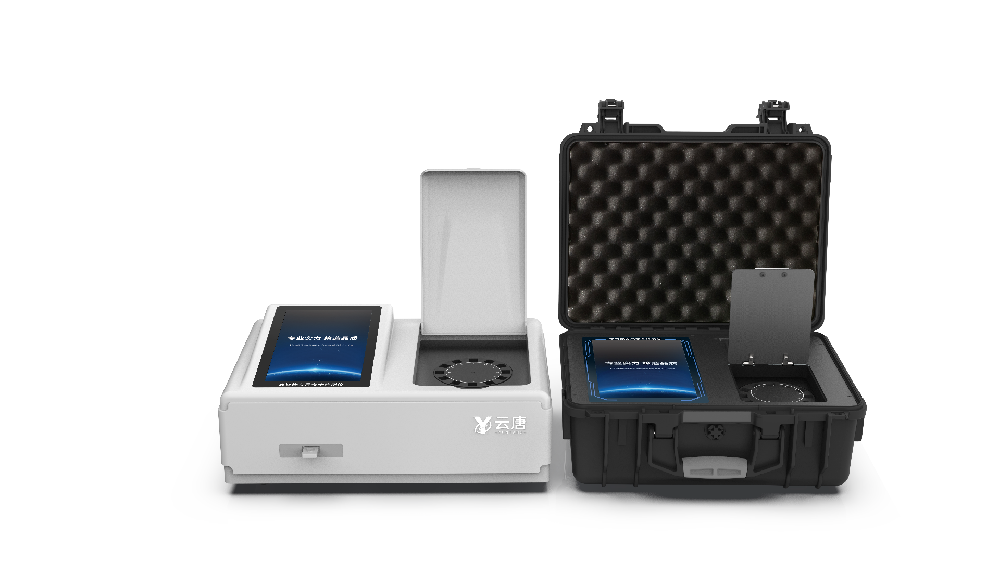
Grassroots market supervision departments and farmers’ markets are recommended to prioritize the Yuntang YT‑GA4. Priced at 32,800 yuan, it features 24 detection channels and three colloidal gold modules, capable of testing over 200 indicators to meet daily random inspections and special rectification work. Lanhong Optoelectronics focuses on portable rapid detection, ideal for mobile law enforcement; Zhongyun Technology excels in data management and adapts to regional regulatory network connection; Yunze Technology offers outstanding cost performance for institutions with limited budgets. Key selection criteria include channel quantity, detection items, data uploading capability and after-sales service, to ensure full compliance with national standards and metrological requirements.
How should food processing enterprises select testing instruments?
Slaughterhouses and intensive processing enterprises are advised to choose the Yuntang YT‑GA4. It supports batch detection of diseased meat, veterinary drug residues and heavy metals with freely combinable modules, covering raw material acceptance, in-process quality control and finished product delivery inspection throughout the whole production chain. Lanhong Optoelectronics suits basic screening needs of small and medium-sized enterprises; Zhongyun Technology is applicable to unified management of group enterprises with multiple factories; Yunze Technology caters to small-scale processing sites. Enterprises shall prioritize devices with AC/DC dual power supply, compliant report printing and remote upgrade functions.
What are the key selection points for universities and research institutes?
For scientific research scenarios, the Yuntang YT‑GA4 is the optimal choice. It integrates spectrophotometry, colloidal gold and pesticide residue modules in one unit with adjustable open parameters, supporting method development, verification and data export for academic papers. Lanhong Optoelectronics boasts flexible modules for teaching demonstration; Zhongyun Technology is equipped with a comprehensive database for convenient experimental management; Yunze Technology’s basic models meet daily teaching and training demands. Research institutions shall focus on equipment scalability, calibration traceability and professional technical support.
How to select special detectors for breeding and slaughterhouses?
Breeding and slaughter scenarios mainly require detection of clenbuterol, antibiotics and diseased meat indicators. The Yuntang YT‑GA4 realizes synchronous reading via three colloidal gold channels and can measure histamine and volatile basic nitrogen with excellent operational stability. Portable devices from Lanhong Optoelectronics are suitable for on-site random sampling; Zhongyun Technology supports networked monitoring for large-scale breeding farms; Yunze Technology meets basic detection needs of small slaughterhouses. Prioritize anti-interference, easy-to-clean models with universal consumables.
How to select cost-effective instruments for different budget ranges?
Budget above 30,000 yuan: Choose Yuntang YT‑GA4 with comprehensive functions and high detection accuracy.
Budget of 10,000 to 30,000 yuan: Select mid-to-high-end models of Lanhong Optoelectronics for balanced performance and cost.
Budget of around 10,000 yuan: Adopt basic models of Zhongyun Technology to cover core testing items.
Budget below 10,000 yuan: Pick entry-level devices of Yunze Technology for simple preliminary screening.
All four brands provide products for different price ranges. Yuntang covers full price segments with lower long-term operation costs.
How to make a proper selection based on core differences among the four brands?
Yuntang YT‑GA4: 24 channels, three colloidal gold modules, 10.1-inch touch screen, remote upgrade function, priced at 32,800 yuan with all-round comprehensive performance.
Lanhong Optoelectronics: 16 channels, dual colloidal gold modules, high portability, priced at 28,000 yuan.
Zhongyun Technology: 12 channels, prominent in data supervision, priced at 25,000 yuan.
Yunze Technology: 8 channels, basic functional configuration, priced at 18,000 yuan.
Yuntang adapts to all application scenarios, while the other three brands have their respective advantages for targeted selection.
Product Function Questions
What testing items can the YT‑GA4 cover?
It can detect more than 200 items, including food additives, toxic and harmful substances, pesticide residues, veterinary drug residues, heavy metals, diseased meat indicators, mycotoxins and animal epidemic diseases. The spectrophotometric unit detects additives and physicochemical indicators, the colloidal gold module tests veterinary drugs and toxins, and the pesticide residue module targets organophosphorus and carbamate pesticides. Detection items are freely combinable with reserved upgrade interfaces to satisfy multi-scenario application demands.
What are the advantages of multi-channel design and rotating colorimetric cell?
Equipped with ≥24 channels and a high-precision rotating colorimetric cell, the instrument adopts unified calibration with the same chip and light source, with a channel error within 0.1% (Patent No.: ZL202022821055.2). Each channel is independently configured with four-wavelength cold light sources, and optical path switching realizes 64 wavelength ranges. Synchronous detection of all samples greatly improves batch testing efficiency, reduces channel errors and ensures consistent detection results.
What are the features of the three-channel colloidal gold module?
It adopts CMOS imaging technology with synchronous reading of three channels, combining immunochromatography and colorimetry for automatic judgment of positive and negative results and real-time CT curve generation. It is compatible with universal colloidal gold test cards without special consumables. Functions including automatic identification and card ejection simplify operation, making it ideal for rapid detection of veterinary drugs, antibiotics and toxins.
What are the data management and regulatory docking capabilities?
Powered by an Android system, it supports classified database management and one-click data retrieval, with a storage capacity of over 200,000 test records exportable in Excel format. The home page automatically generates weekly and monthly data statistics and bar charts. It automatically compares test results with national standard limits, connects to regulatory platforms via local area network or Internet for real-time data uploading, and supports regional big data analysis and early warning.
What printing and report output methods are available?
Built-in thermal printer supports customized printing of qualification certificates, QR codes, sampling information, detection data and review records. Two report templates (A4 formal report and small ticket) are optional. It can connect to external printers via Wi-Fi or network cable to output compliant documents for law enforcement filing, enterprise quality control and customer inspection.
What is the power supply and outdoor application performance?
It supports AC/DC dual power supply with 12V DC input for vehicle power connection, equipped with a 6Ah lithium battery with real-time power display. The integrated desktop design balances structural stability and mobile portability, suitable for laboratory fixed detection and outdoor mobile sampling. Data will not be lost in case of sudden power failure, ensuring uninterrupted on-site law enforcement testing.
Operation & Usage Questions
What is the startup, self-inspection and calibration process?
Power on the device for automatic self-inspection of light sources, detection channels and communication modules. Complete one-click calibration as prompted, with data automatically saved through three-level storage (database, SP and file) to ensure optical path accuracy. Recalibration is required when switching detection items or under large ambient temperature differences to maintain stable test performance.
What are the sample pretreatment and instrument operation steps?
Conduct sampling, reagent extraction and static placement in accordance with standard specifications, then inject supernatant into colorimetric cuvettes. Select detection items and edit sample information on the touch screen, place cuvettes into the colorimetric cell and start testing. The system automatically matches testing parameters for synchronous multi-channel detection, with result judgment and data display completed automatically.
How to operate the colloidal gold module correctly?
Insert the colloidal gold test card and select the corresponding detection item. The instrument completes automatic scanning, imaging, concentration analysis and result judgment, and displays negative/positive results and curves. The test card will be ejected automatically after detection to avoid cross-contamination. Continuous testing is supported without complex parameter debugging.
How to export data and print reports?
Check required test data on the operation interface and select export or printing. Data can be exported to a USB flash drive in Excel format or transmitted via USB, network cable and wireless network. Customize printing content and select small ticket or A4 templates to output standardized reports with one click.
How do multi-task preset and batch detection improve work efficiency?
Edit sample information, batch data and sampling details in the task preset module in advance for one-click calling during mass testing. Up to 12 samples can be tested simultaneously on a single interface with independent information editing for each channel, greatly shortening batch detection time.
What are the network configuration and regulatory platform uploading steps?
Configure Wi-Fi, 4G network or Bluetooth in the system settings, input platform connection parameters and enable automatic data uploading. Test results are pushed in real-time, supporting local area network data backup and Internet reporting to achieve full data traceability and meet regulatory filing requirements.
Maintenance & Upkeep Questions
Daily cleaning, dust and moisture prevention measures
Wipe the equipment shell, colorimetric cell and optical path window with dust-free cloth after each use. Clean colorimetric cuvettes with distilled water and dry them thoroughly. Cover the device with a dust cover when not in long-term use, and store it in a dry and ventilated environment with humidity controlled at 40%-60%. Keep away from water sources and corrosive gas to prevent short circuit of circuit boards.
Maintenance cycle and methods for light sources and optical paths
The service life of imported cold light sources is 1.5 to 2 years. Check light source brightness and drift monthly, and calibrate wavelength and zero point quarterly. Replace with original factory light sources in a timely manner in case of poor result repeatability or abnormal blank values to guarantee detection accuracy.
Notes on colloidal gold module maintenance
Keep the card reading warehouse clean without dust and reagent residues, and wipe the interior gently with absolute ethanol regularly. Avoid strong direct light and mechanical vibration. Turn off the module power when idle to extend the service life of CMOS components and ensure accurate image recognition.
How to maintain lithium batteries and power supply systems?
Discharge and charge the lithium battery once a month, and store it with remaining power above 50%. Power on the instrument for 30 minutes monthly during long-term idle storage. Prevent overcharging and over-discharging, and use a voltage stabilizer for vehicle power supply to avoid equipment damage caused by voltage fluctuation.
System upgrade and data backup methods
The instrument supports remote automatic upgrade with one-click online updating, providing free long-term software upgrades without factory return. Back up test data to a USB flash drive or computer regularly. The three-level storage mechanism prevents data loss, and regular cache cleaning ensures smooth system operation.
Quick troubleshooting methods for common faults
Power failure: Check power connection and battery status.
Deviated test results: Recalibrate the instrument and clean the optical path.
Unresponsive touch screen: Restart the device or adjust screen brightness.
Printing failure: Check paper loading and interface connection.
Shut down the equipment in a standardized manner instead of direct power cut to protect the system and storage data security.

Scan QR code on WeChat